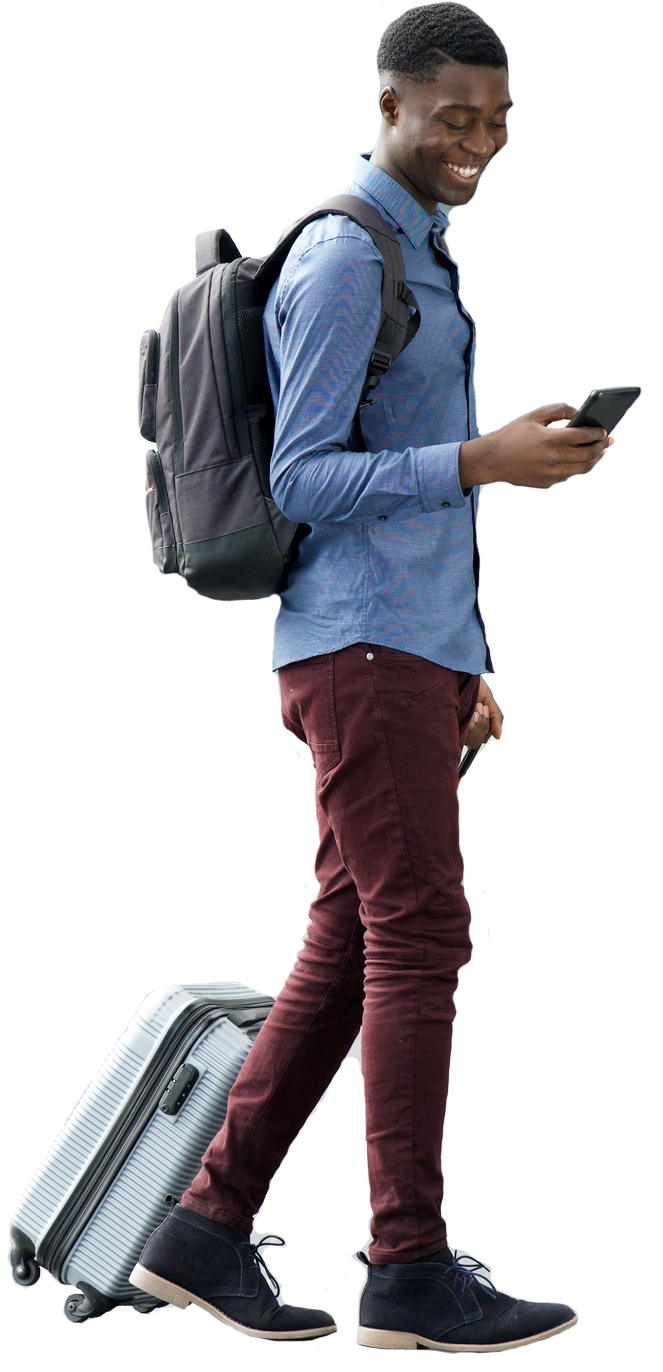

Tips for Fast, Efficient Travel

Image courtesy of ferra-jordan
I don’t have one of those jobs/lives where I travel with great frequency. I’m not on a plane every week or anything. There have been times when I’ve been on a plane once a month, though. My father used to take two planes each week, going from our home in Cincinnati to his work in Grand Rapids and coming back again at the end of the week. I learned all the basics of travel from him. As I’m preparing to make 3 separate trips in 3 weeks (2 personal, 1 business), I thought I’d share my simple tips and rules for fast and efficient travel.
Never Check Bags
This is my #1 rule. You will save so much time and worry. Your luggage will never be lost. You don’t need to shove everything you might need during your travels into a big computer bag. You don’t need to stand in baggage drop-off lines. You don’t have to pay extra fees. You never have to waste time standing at baggage claim ever again. Shall I go on?
The first thing you need to do is…
Get the Right Suitcase
The right bag can set you free and make carrying on your stuff a snap. The wrong bag can make you miserable.
Here’s what I look for in a bag:
- 4 wheels, each that turn 360 degrees. This makes moving through the airport so much easier because you can move your bag in any direction without it toppling over. Also, you don’t have to pull your bag if you don’t want to. Leave it standing upright and use the telescoping handle to push it along side you through the airport. It’s so much easier on your arms, shoulders and back.
- Polycarbonate shell. Poly is light, which is good since you’ll be lifting this thing over your head a couple times. Poly is durable (unlike fabric, which can be punctured, ripped or torn). Poly is hard, which means your stuff won’t get crushed.
- Efficient use of space. Too many pockets and compartments, and you won’t be able to pack what you need in the space. Too few, and packing just becomes a jumble. You need the right mix of space and pockets.
- Not black. Not only is black luggage boring, it looks just like everyone else’s. When you’re trying to get your stuff from the compartment and get off the plane, you want to make sure you have your bag and not someone else’s (or that someone else doesn’t take your bag). Your bag can still look professional without being black. Find another color.
The bag that I use is a 20″ Samsonite Sahora.

It is light. It is (mostly) polycarbonate. It is expandable. It has great use of space. It has 4 spinning wheels. And it is blue. It’s just about the perfect carry-on bag. (It is available in other colors, including red.)
A bag like this costs more. But it’s worth it. And it will last a lot longer than the cheap bags do. Also don’t forget the hassle that you’re saving yourself, as well as all those checked bag fees.
Speaking of bags, there’s your laptop bag to be considered here. There are lots of options here. I always look for a bag with a pass-through sleeve in the back so I can slip it on top of my carry-on and take them both together as one unit. Helps save my back and arm strength from toting them around all day.
Now that you have the right bag, it’s time to…
Pack Efficiently
The easiest way to fit all your stuff in the bag is to not take as much stuff. Eliminate anything you can live without for your trip. Look for things that can do double (or triple) duty. For example, I try to take as few shoes as I can possibly get away with, because shoes take up lots of space. I try to pack no shoes, and just wear what I wear on the plane the entire trip. Bust sometimes I need dressy shoes, so I take one pair of neutrally colored shoes that go with everything.
Once you have everything picked out for your trip, you need to pack it. Not all packing methods are the same. Some people like to roll, some people like to fold. I find that folding and using dry cleaning bags to keep everything snug helps save room and eliminate wrinkles. I learned this method from the Manager Tools podcast and it works really well. I fold my pants lengthwise twice, and put them next to each other inside the dry cleaning bag. Then fold the excess part of the bag inward, put a third pair of pants on top of the pair at the top, then fold the first and third pair (at the top) over the second, so you have 3 pairs stacked. You can do the same thing with shirts. I generally don’t do this with casual clothes, but I do with business/dress clothes.
Don’t Buy Travel Sizes (If You Can Help It)
Many people get tripped up by the restriction on liquids in your carry-on. But you can save money and space with just a few tricks.
First, know that medicines don’t count against you. Put them in a separate bag. So if you need your Flonase (like I do), you don’t need to put that in your toiletries bag.
Second, figure out what you really need. You might use a lot of stuff at home that you could go without for a couple days.
Third, don’t buy travel sizes. Make them when at all possible. Find some small containers (the smaller the better) and just use your existing stuff to fill them. In the case of things that the hotel usually provides you (soap, shampoo, lotion, etc), just use theirs. There are some things I haven’t found a way around yet — a good way to store and dispense contact lens solution, for example. So I do buy travel sizes of that. But I am always looking for a way around it. (Ideas?)
Put all your containers in a zip-top bag (I call this the “wet bag”) and put it somewhere easily accessible when you’re in the security line. You don’t want to open up your luggage just to get to it later.
Dress for Security Success
Gone are the days when people got really dressed up to get on an airplane. I’m never surprised to see people basically in their pajamas, especially on a red eye. Unless I have a business meeting when I get off the plane, I travel casually — jeans and a T-shirt.
Think about what you’re wearing on the plane. Is there any metal on it? Is it excessively complicated? Metal will cause problems with the detector and you may get singled out for further screening. Think about jewelry, belts and watches. (Rivets on jeans usually don’t cause a problem.) The TSA requires that you take off coats, jackets, and sometimes sweaters, if you have something on underneath. Are you wearing something that you might have to take off, then spend time putting back on? If so, re-think.
What kind of shoes are you wearing? Lace-up shoes just require more hassle to get off and time to get back on. I like slip-on shoes, like Vans. They are easy to get off and on. Oh, and I always wear socks with whatever shoes I’m wearing. I don’t want to walk through security barefoot.
Security Efficiency
The whole point of this is to do everything you have to do in the least amount of time and with the least amount of hassle. Some planning ahead will really help here. You’ve already got a security-friendly outfit on, so you’re well on your way.
I always check in the night before, print my boarding pass, and put the boarding pass and my driver’s license in an easy-to-reach pocket of my computer bag. That way, I don’t have to fumble in the security line or stop before I get there to get my pass and ID ready. It’s already ready. Just pull it out and show it to the agent.
Once you get in line for the screening, start getting ready. Your wet bag is already easily accessible. Your shoes come off easily. Grab a couple bins and put your laptop in one (it has to go alone) and your shoes, coat, and wet bag in another. Then feed your computer bag and your carry-on into the x-ray machine. You still have your pass and ID in your hand, so you’re ready to walk through the metal detector and hand it over.
BE NICE TO THE TSA AGENTS. I cannot stress this enough. Put yourself in their shoes — they have to deal with cranky, nervous, tired, anxious, self-centered travelers all day. I’d be in a pretty bad mood, too. And they can totally ruin your day (or worse) if they are so inclined. A smile, a thank you, and generally being super nice and cooperative will go a long way in helping the process flow smoothly.
When you are done with screening, just put your computer back, your wet bag back, slip your shoes on, grab your stuff, put your boarding pass and ID in your pocket (you can put it back in your wallet later), and off you go.
Extra Tips
Here’s a few things that didn’t seem to fit anywhere else.
- Bring all confirmation numbers, record locators, and other travel details with you. I use Evernote to help me store my travel details on my phone, but I also put it in my calendar just in case. You never know what can happen, and having a confirmation number at your disposal can solve a lot of problems.
- Always have a snack on you. Who knows what could happen — you could get stuck on the tarmac, all the food in your terminal could be terrible, or you get hungrier at the end of the flight than you thought you would. It doesn’t have to be a full meal — a small bag of trail mix will do the job just fine. But always have a snack on you just in case.
- Invest in an eye mask. Mine has totally saved me from sleepless flights and sleepless nights. It, and some headphones, can make the whole world go away. I never take a flight without it.
- Take public transportation if possible. Avoid parking fees and remembering where you parked. If you need to drive and park though, take a photo of where you parked or text yourself the location.
- If you’re in hotels a lot, text yourself the name of the hotel and the room number. Or take a photo of the door to your room (with the door number) and store it in Evernote.
I hope these tips were helpful. If I missed your favorite, pleas share it in the comments.
Nice article! Provoked plenty of thoughts:
1. I prefer a softsided bag with backpack straps as well as wheels. Not to sound like a commercial (there’s plenty other good competitors out there), but I love my Victorinox carry-on. It’s light, the wheels are fairly stable, and the additional bag that snaps on is great for day trips and handily fits my laptop (in sleeve), water, and other items I’ll want handy during the flight. The back pack straps are fantastic if you’re ever in place with dirt or other non-smooth roads.
2. Plan ahead, and make sure the items you want/need are with you (even the overhead is too far away, if you’re stuck in the middle seat and want your eyedrops, etc.). Same goes for valuables. (I always cringe when I watch people throw their bags onto other items in the overhead compartments.)
3. An empty water bottle. This might be a little cheap of me, but I’d rather pay for food than water. My empty water bottle means I can fill up at the drinking fountains, and I’ll have it for the rest of my trip as well. Green and economical–love that.
4. Keep an eye on changing regulations. It a bit mind boggling how many details there are, but most airline websites have a link the TSA regulations (as well as their own). I find that it’s worth the peace of mind to check prior to every trip. (But, again, I’m more of a casual than a business traveler.)
5. Ear plugs (and headphones/music). I only discovered ear plugs this year. I’m not sure how I got by without them. The wailing baby, the droning conversation, even just ambient noise–all relegated to the background. Makes me a much more pleasant person to travel with, and it usually helps me focus and get a ton done on my flight. Guess that makes it a win-win.
Keep writing! I’m enjoying your posts!